Bushehr: Where Iran’s history meets the Persian Gulf
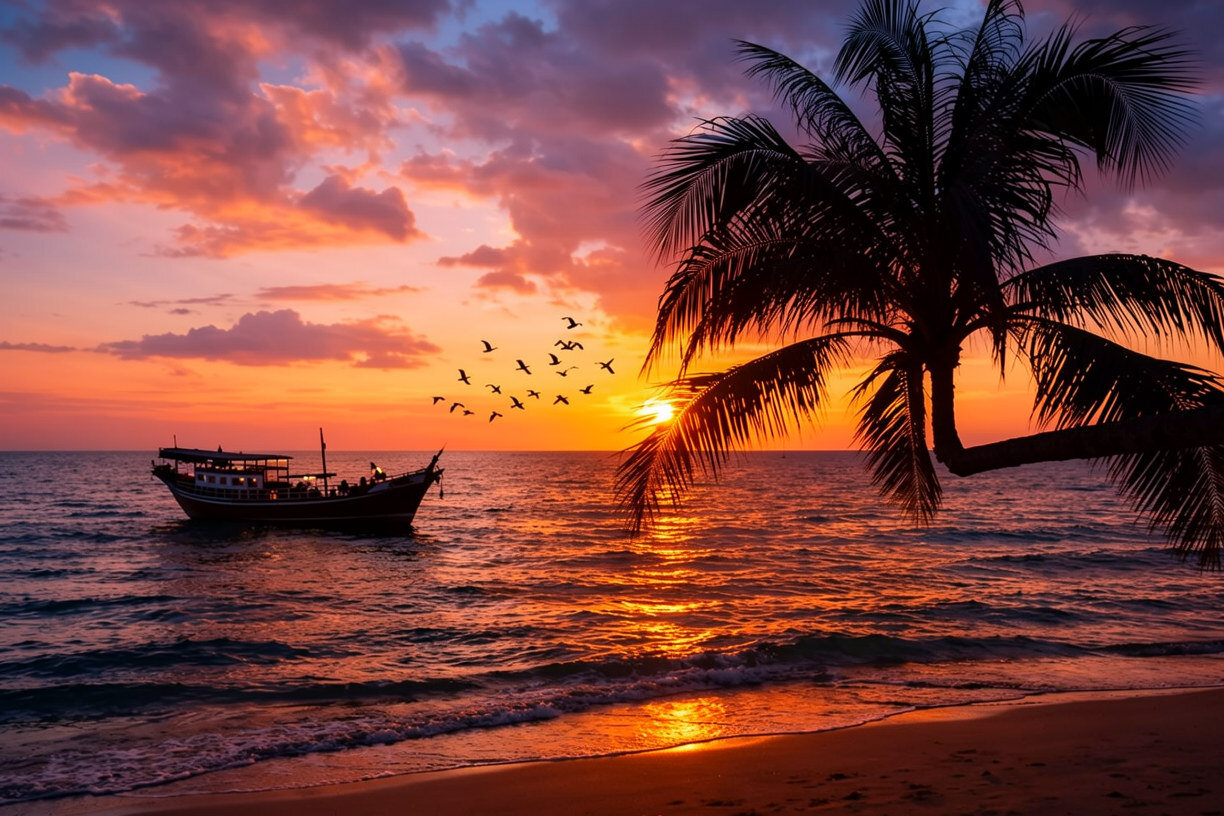
TEHRAN - On Iran’s southern coast, where the Zagros Mountains descend toward the Persian Gulf, Bushehr offers a distinctive blend of history, architecture, nature and living traditions. The sea has shaped almost every aspect of life here, from trade and fishing to cuisine, music and the design of traditional houses.
The provincial capital, Bandar-e Bushehr, occupies a peninsula extending into the Persian Gulf. Its historic neighborhoods, shaded alleys, merchant mansions and waterfront reflect a time when the port connected Iran with trading networks across the Persian Gulf and the Indian Ocean. Beyond the city, the province unfolds into a varied landscape of archaeological sites, date-palm plantations, mountain villages, sandy beaches and unusual geological formations.
For travelers interested in Iran beyond its better-known destinations, Bushehr offers an opportunity to discover a region whose identity has been shaped by maritime exchange, ancient civilizations and the resourcefulness of coastal communities.
A port shaped by history
Bushehr’s strategic position has made it an important center of settlement and commerce for centuries. Archaeological evidence points to human activity in the region during different historical periods, including the Elamite, Achaemenid, Parthian and Sassanian eras.
The port regained prominence during the Afsharid period and developed further under the Zand and Qajar dynasties. Its maritime connections attracted merchants, travelers and foreign commercial interests, bringing wealth and cultural influences to the southern Iranian coast.
The wider province also contains archaeological remains associated with ancient Iranian kingdoms. Ruins of palaces and settlements in Dashtestan, along with historic sites scattered across the region, demonstrate that Bushehr’s significance extends well beyond its more recent commercial history.
Bushehr province was formally established in 1973. Today, it combines a busy industrial and commercial economy with a heritage that remains visible in its historic towns, coastal villages and archaeological landscapes.
The old city, architecture adapted to the heat
One of the best ways to understand Bushehr is to walk through its historic urban quarter, a district of traditional houses, merchant mansions, courtyards and narrow lanes.
The old city includes four principal neighborhoods: Behbahani, Kuti, Dehdashti and Shanbadi. The area flourished particularly during the Zand and Qajar periods, when the port played an important role in maritime commerce.
Its architecture reflects generations of adaptation to the hot, humid coastal climate. Traditional builders used materials such as stone, timber, lime and stucco, arranging buildings to provide shade and encourage air circulation. Narrow streets, internal courtyards, wooden shutters and shaded balconies helped make everyday life more comfortable under the southern sun.
Walking through the old quarter reveals how these features work together. Weathered balconies overlook narrow alleys, traditional doors open onto courtyards, and old residences stand alongside shops and cafés. The neighborhood is not simply an architectural attraction but a record of the relationship between the port’s inhabitants and their environment.
Historic mansions and maritime heritage
Several buildings offer a closer look at the prosperity and international connections that once characterized Bushehr.
For instance, the Malek Mansion, one of the city’s best-known landmarks, is associated with Mohammad Malek ol-Tojjar, a wealthy merchant. Built during the Qajar period, the large complex features balconies, columns, spacious interiors and elaborate wooden doors. Its design reflects local architectural traditions alongside influences that circulated through Bushehr’s international commercial connections. The mansion later served different purposes, including military accommodation, and has undergone restoration.
The Dehdashti Mansion, also known as the Oil Edifice, is another prominent historic property. The Taheri Mansion, formerly called Amiriyeh Mansion, now houses an ethnographic museum that introduces visitors to local occupations, domestic life, handicrafts and maritime traditions.
Other attractions include Golshan House, Tabib Mansion, the Qavam Water Reservoir, St. George’s Church, the English cemetery and the Maritime Museum of the Sea and the Persian Gulf. Together, they reveal different aspects of life in a port shaped by trade, religious diversity, water scarcity and contact with other cultures.
The historic market provides another glimpse into everyday life. Visitors can browse local food products, handicrafts and household goods while observing the commercial traditions that remain part of the city’s character.
Tangestan: A legacy of resistance
Bushehr’s history is also associated with resistance to foreign intervention. In Tangestan, the name of Rais Ali Delvari remains closely linked to the struggle against British forces during World War I.
Delvari, a local leader who mobilized fighters in southern Iran, became a symbol of resistance and the defense of national independence. His former home in Delvar, a coastal settlement near Bushehr, has been converted into a museum, preserving objects and accounts associated with the resistance movement and local life.
Tangestan offers other attractions, including historic castles, traditional qanats and the Tal-e Kushk site in Shahrabad. The Qucherak hot springs near Ahram provide a different reason to explore the area.
Combining these sites with coastal excursions offers travelers a broader understanding of a region whose history encompasses commerce, agriculture and political struggle.
Dashtestan: Palaces, caves and palm groves
East of Bushehr, Dashtestan offers a landscape where archaeological remains and date-palm plantations stretch across the plains.
Borazjan, the county’s main urban center, is known for its date production and its position along routes linking the coast with inland Iran. The surrounding area contains the ruins of the Black Bardak Palace near Dorudgah village and remains traditionally associated with the Great Cyrus Palace southeast of Borazjan.
The Chehel-Khaneh Caves near Sadabad are another notable attraction. Rock-cut chambers and openings in the cliffs create a striking landscape whose original functions and historical associations invite further exploration.
Date palms are central to the region’s economy and food culture. Their cultivation supports local livelihoods, while fresh and dried dates, date syrup and sweets made from date paste feature prominently in the province’s markets and kitchens.
Siraf, a window onto the maritime world
Further southeast along the coast, the historic port of Siraf offers one of Bushehr Province’s most compelling links to the wider history of the Persian Gulf.
Siraf flourished as a maritime trading center during the Sassanian and early Islamic periods. Its merchants participated in commercial networks connecting Iran with the Arabian Peninsula, India, East Africa and China. Goods, people and ideas passed through the port, helping establish its reputation as a center of maritime exchange.
Today, archaeological remains include ancient wells, rock-cut tombs, traces of historic buildings and remnants of settlements extending toward the surrounding hills. The combination of ruins, rugged terrain and sea gives Siraf a distinctive atmosphere.
Its history also reflects the vulnerabilities of coastal settlements. Earthquakes and other changes contributed to the decline of the historic port, leaving parts of its former urban landscape scattered across the area.
Unlike a single monumental complex, Siraf reveals its history gradually, through the relationship between the archaeological remains, the hills and the shoreline.
Jashak Salt Dome and coastal nature
Bushehr’s attractions extend beyond historic settlements. Inland, the Jashak Salt Dome, between Dashti and Deyr, offers a dramatic contrast to the blue waters of the Persian Gulf.
Part of the southern Zagros geological landscape, the formation features white salt surfaces, colored mineral bands, caves and unusual erosion patterns. Some formations resemble glaciers or waterfalls, although they are shaped by salt and water rather than ice. Shades of white, orange, yellow and gray create a striking natural spectacle.
The terrain can be difficult to navigate, particularly in hot weather. Visitors should arrange suitable transport and guidance, carry sufficient drinking water and avoid exposed areas during the hottest hours.
Another important natural destination is Nayband National Sea Park, near Asaluyeh. Its coastal habitats, beaches, marine environments and mangrove ecosystems support wildlife, including migratory birds and marine species. The protected area offers opportunities for nature-based tourism, provided visitors respect its sensitive habitats.
Ganaveh combines a lively commercial atmosphere with coastal scenery. Its large market attracts shoppers from across Iran, while its beaches offer space for seaside walks and relaxation. In Jam, gardens, mountain landscapes and historic water infrastructure provide further opportunities for travelers exploring the province beyond the main port.
Music, handicrafts and local traditions
Music is an essential part of Bushehr’s cultural identity. Local traditions accompany celebrations, social gatherings, work and religious ceremonies, reflecting the region’s varied cultural influences and maritime connections.
The neyanban, a bagpipe-like instrument, is closely associated with regional music. Percussion instruments such as the damam and senj play prominent roles in mourning ceremonies, where rhythmic performances accompany traditional forms of lamentation.
Bushehr’s handicrafts also reflect its natural environment. Palm leaves are woven into mats, baskets, brooms and other household items, while shells are used to create jewelry and decorative objects. Carpet and kilim weaving, gabbeh production, pottery and boatbuilding contribute to the province’s craft heritage.
The flavors of the Persian Gulf
Seafood is at the heart of Bushehr’s cuisine. Fish and shrimp are prepared with aromatic herbs, garlic, tamarind and spices, often producing the bold, tangy flavors associated with southern Iranian cooking.
Among the best-known dishes are ghalieh mahi, a spicy fish stew, and ghalieh meygoo, prepared with shrimp. Both are commonly served with rice. Other local specialties include steamed fish, lakh-lakh, a rice dish cooked with fish and seasonings, and fish tah-andaz, in which fish forms a flavorful layer beneath the rice.
For a meat-free option, yatimak combines eggplant, beans, onion and seasonings. Bushehri variations of traditional Iranian stews and lentil dishes offer further tastes of local home cooking.
Dates are equally important. Fresh dates, dried dates, date syrup and sweets made from date paste are widely available. Ranginak, a dessert made with dates and other ingredients, and date halva are among the treats visitors should look for. Local pickles, herbs, date bread and palm-derived products also make distinctive souvenirs.
Traditional restaurants and local eateries are good places to sample these dishes, while markets offer opportunities to discover regional ingredients and handicrafts.
When to visit
Bushehr has hot summers, with high humidity along much of the coast. Temperatures can exceed 50 degrees Celsius on exceptionally hot summer days, making autumn, winter and early spring the most comfortable seasons for sightseeing.
The cooler months are well suited to walking through the historic quarter, exploring archaeological sites and visiting coastal communities. Excursions to Jashak Salt Dome and other remote areas require advance planning, appropriate transport and attention to weather conditions.
Accommodation ranges from hotels and guesthouses to locally run houses and ecotourism lodgings. Staying in traditional or locally operated accommodation can provide opportunities to experience regional food, hospitality and everyday customs. Travelers should confirm current availability and access arrangements before visiting individual attractions.
AM
Leave a Comment